
Lottogo casino Plinko game
Introduction
Plinko has become one of the most discussed instant-win formats in modern online gambling, and I understand why. At first glance, it looks almost too simple to deserve serious attention: you drop a ball from the top of a pegboard, it bounces left and right, and eventually lands in a slot with a multiplier. That is the whole visual idea. But when I look at Lottogo casino Plinko from a player’s point of view, the appeal is not just in the simplicity. It is in the way that simplicity hides tension, pace, and a very direct relationship between stake, variance, and expectation.
For UK players browsing Lottogo casino, Plinko stands out because it does not behave like a slot machine, a roulette table, or a Lottogo Casino crash games details before claiming bonuses or depositing, even though it borrows something from each of those experiences. It has the instant feedback of fast casino games, the suspense of a random path, and the emotional swing of high-volatility gambling when the settings are pushed upward. That combination is exactly why this format keeps attracting attention.
In this review, I will stay focused on the game itself: what Plinko is, how the mechanic works in practice, what the risk settings really change, what kind of session rhythm it creates, and what a player should understand before pressing launch. If you want to know whether Plinko at Lottogo casino is genuinely worth trying or whether it is simply a trendy format with a clean interface, this is the part that matters.
What Plinko is and why it keeps pulling players in
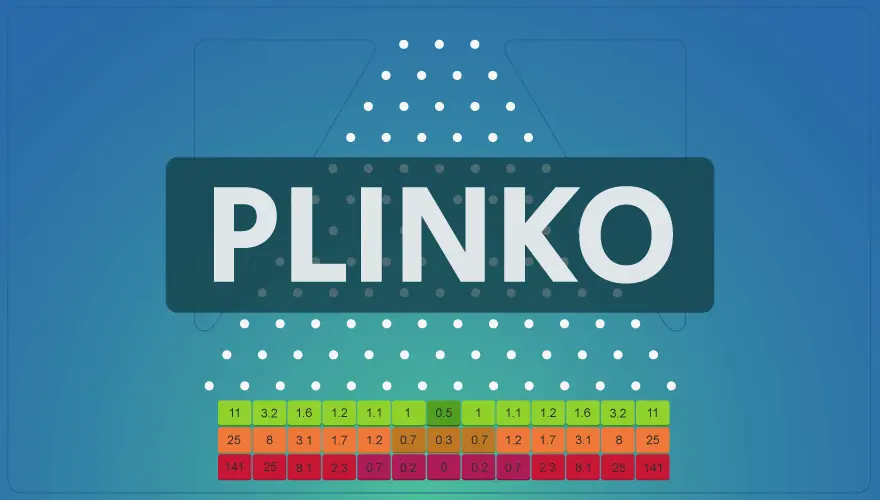
Plinko is a probability-based casino game built around a falling ball and a field of pegs. The player chooses a stake, usually selects a risk level, and in many versions can also choose the number of rows. Once the ball is dropped, it hits peg after peg on the way down, changing direction with each contact until it lands in one of the payout slots at the bottom. Each slot carries a multiplier. The lower multipliers are normally concentrated around the centre, while the largest multipliers sit near the far edges, where the ball reaches less often.
That description sounds mechanical, but the real attraction comes from the contrast between what the player sees and what the session feels like. Visually, it is one ball moving through a neat grid. Emotionally, it is a sequence of tiny binary moments: left or right, centre or edge, small return or rare spike. This is one of the reasons Plinko became so visible across online platforms. It turns probability into something players can watch unfold in real time.
There is also a practical reason for its rise. Many players have grown used to dense slot interfaces packed with bonus checklist symbols, side features, wilds, and layered pay systems. Plinko strips all of that away. It offers a cleaner decision loop:
- Choose your stake.
- Select the risk profile.
- Drop the ball and see the outcome immediately.
That clarity gives the game a broad reach. New players understand it quickly. Experienced players recognise almost instantly where the volatility sits. Streamers and casual viewers also like it because the outcome is easy to follow without needing to decode a paytable. But visibility alone does not make a game worthwhile. What matters is whether the underlying logic creates a satisfying and transparent experience. In Plinko, that depends heavily on how the board is configured.
How the Plinko mechanic actually works at session level
The core mechanic is based on repeated deflections. Every time the ball strikes a peg, it shifts to one side. Over many drops, this creates a distribution in which central landing zones appear more often than extreme outer slots. That is why the board usually pays modest multipliers most frequently in the middle and reserves the headline figures for the edges.
From a design perspective, this is elegant. From a player perspective, it means one thing: the board is not random in a flat, even way. It is random within a structured probability curve. That distinction matters. Many new players see several multiplier slots at the bottom and assume each has a similar chance. In practice, they do not. The centre is typically the traffic zone. The edges are where the rare outcomes live.
Most Plinko versions available on modern gambling platforms, including formats players expect to see at Lottogo casino, allow some combination of the following settings:
- Bet size — the amount staked per ball drop.
- Risk level — usually low, medium, or high, affecting the payout spread.
- Rows — the height of the board, which can influence the path complexity and multiplier range.
- Auto-play — repeated drops at a chosen pace.
The most important of these is the risk level. This setting changes the shape of the reward distribution. On low risk, the board usually offers more frequent modest returns and a narrower gap between common and rare outcomes. On high risk, the centre can become less forgiving while the edges carry much larger multipliers. In plain terms, the game becomes swingier: long stretches of small or losing results are traded for a chance at a sharp hit.
That is where Plinko stops being a toy-like visual and becomes a serious variance tool. The same interface can produce two very different user experiences depending on the chosen profile. A low-risk session may feel steady, almost hypnotic. A high-risk session can feel harsh, even when the board looks identical.
Why the game feels fast and where the tension really comes from
One of the most interesting things about Plinko is that its pace is not created by complex features. It is created by repetition and anticipation. Each round is short. The ball falls quickly. The result is visible immediately. There is no waiting for reels to stop, no bonus round to trigger, no side narrative to build. Yet the game still generates suspense because the path is visible and the destination remains uncertain until the final bounce.
In practical terms, this gives Plinko a very distinctive session rhythm. It can be played casually in short bursts, but it can also accelerate into a rapid cycle of drops if auto-play is enabled or if the player starts chasing a larger multiplier. That speed is a strength and a warning sign at the same time. The game is easy to consume quickly.
I think this is one of the most overlooked truths about Plinko: the interface looks calm, but the bankroll movement can be surprisingly aggressive. Because every round resolves so fast, the player can move through a large number of stakes in a short period. On low settings, that may feel controlled. On high settings, the same speed can magnify losing stretches before the player fully registers what the session is doing.
Another memorable point is that Plinko creates suspense without pretending to be strategic. The player does make choices, but those choices sit mostly before the drop, not during it. Once the ball is released, control ends. This makes the game honest in one sense and dangerous in another. Honest, because it does not disguise random resolution behind layers of decorative interaction. Dangerous, because the clean presentation can make the volatility feel lighter than it really is.
Risk levels, probabilities, and what they mean in real play
If there is one section a player should understand before trying Lottogo casino Plinko, it is this one. The game is easy to read visually, but the probability structure is where the real story sits.
Plinko is not a game where every result is equally likely. The architecture of the board naturally favours central outcomes. The exact maths depends on the version, row count, and risk setting, but the broad principle remains the same: the most dramatic multipliers are attached to the least frequent landing zones. That is why screenshots of huge hits can be misleading if taken out of context. They show what is possible, not what is typical.
The risk setting usually affects the board in these ways:
| Risk level | Typical session feel | Common result pattern | Player impact |
|---|---|---|---|
| Low | Smoother and more measured | More regular small returns, fewer sharp spikes | Bankroll tends to last longer, but top-end excitement is reduced |
| Medium | Balanced but still variable | Mix of modest results and occasional stronger multipliers | Suitable for players who want tension without extreme swings |
| High | Erratic and emotionally intense | Longer dry patches with rare but much larger hits | Can produce standout moments, but bankroll pressure rises quickly |
What does this mean in practice? It means players should stop thinking only in terms of “can this game pay big?” and start asking “how often does this board return something meaningful relative to my stake?” Those are not the same question. A game can advertise a strong maximum multiplier and still create a session dominated by low-value landings.
Another point worth stressing is that probability in Plinko feels emotional because it is visible. In a slot, random resolution is hidden inside reel outcomes and symbol combinations. In Plinko, the player watches the ball flirt with a high multiplier and then bounce away at the last second. That visual near-miss effect is powerful. It does not change the mathematics, but it absolutely changes how the session is experienced.
Who Plinko suits and when it may be the wrong choice
Plinko suits players who enjoy fast outcomes, clear rules, and direct control over variance settings. If you like seeing a result in seconds and adjusting the risk profile to match your mood or budget, this format makes sense. It is also a reasonable choice for players who find traditional slots too cluttered or too dependent on bonus rounds that may take time to trigger.
It may be especially appealing to:
- Players who prefer simple interfaces over feature-heavy reel games.
- Users who want to test different risk settings without learning a complex paytable.
- People who enjoy short, high-feedback sessions.
On the other hand, Plinko may not be ideal for everyone. If you enjoy the layered structure of slots, where base spins build toward free spins, expanding symbols, or themed bonus stages, Plinko can feel too bare. If you prefer games where the entertainment comes from audiovisual immersion, story, or evolving features, this format may lose its appeal quickly. And if you are uncomfortable with rapid bankroll swings, high-risk Plinko is a poor fit.
This is the third observation that often gets missed: Plinko is simple to learn, but not always comfortable to absorb. Some players love the stripped-back immediacy. Others realise after ten minutes that the lack of feature progression makes every round feel isolated. Whether that is a strength or a weakness depends entirely on what you want from a gambling session.
What to know about session rhythm, streaks, and expected outcomes
Plinko can create misleading expectations if a player judges it from a handful of drops. Because rounds are so short, it is tempting to assign meaning to recent outcomes: a run of central landings can make the edges feel “due,” while a rare high multiplier can create the impression that another one may appear soon. In reality, each drop is a new event within the same probability framework. Short-term patterns are emotionally persuasive, but they do not guarantee correction.
That matters because the game encourages repetition. A player can easily run through dozens or hundreds of drops in a single sitting. With that volume, streaks become part of the experience. You may see a sequence of low-end outcomes that feels harsher than expected, especially on high risk. You may also hit a strong multiplier earlier than logic would suggest. Both can happen. Neither proves the board has changed behaviour.
Before launching Plinko at Lottogo casino, I would keep these practical points in mind:
- Fast rounds compress perception — the session can feel short even when many bets have already been placed.
- Large multipliers are not the baseline — they are the exception that gives the board its appeal.
- Risk settings shape the experience more than many players expect — changing from low to high can transform the same game into a different bankroll challenge.
- Auto-play needs discipline — it is convenient, but it can also detach the player from the pace of spending.
In other words, Plinko works best when approached with a clear idea of session length, stake size, and what kind of volatility you are actually willing to tolerate. Without that, the simplicity of the format can encourage careless play.
How Plinko differs from classic slots and other casino formats
Comparing Plinko to slots is useful because many players arrive at it from reel-based games. The biggest difference is structural. Slots are built around symbol combinations, paylines or ways-to-win systems, and often a layered feature set. Plinko is built around a single event path and a multiplier slot. There are fewer moving parts, but the variance can be just as serious.
| Format | Core interaction | Main source of tension | Typical player experience |
|---|---|---|---|
| Plinko | Drop-based random path | Where the ball lands on the board | Fast, direct, highly visible probability |
| Classic slots | Reel spin and symbol alignment | Feature triggers, combinations, bonus access | More layered, theme-driven, often slower to peak |
| Roulette | Bet on fixed outcomes | Single-number or section result | Clear odds structure, less visual path suspense |
| Crash games | Cash out before bust | Timing of exit | More interactive, but psychologically pressurised |
What makes Plinko distinct is the combination of transparency and emotional pull. Unlike slots, it does not hide its random engine behind symbols. Unlike roulette, it gives the outcome a visible journey. Unlike crash games, it does not ask the player to make a last-second decision under pressure. You choose the conditions, then watch probability do its work.
That can be refreshing. It can also feel repetitive if you need more layers in your play. Plinko does not build narrative momentum the way a bonus-heavy slot can. It builds tension through repetition, not progression.
Strengths and weak points of the game in practical terms
Every useful review should separate surface appeal from real-world behaviour. In that spirit, here is how I assess the strongest and weakest sides of Plinko when viewed as a playable format rather than a trend.
Where Plinko works well:
- Immediate clarity — new players grasp the rules within seconds.
- Visible probability — the falling path makes randomness easier to understand emotionally.
- Flexible variance — low, medium, and high settings allow different session styles.
- Fast feedback — ideal for players who dislike long setup or feature build-up.
Where it becomes less comfortable:
- Rapid stake turnover — the speed can drain a bankroll faster than the calm interface suggests.
- Limited depth — players who want evolving features may find it repetitive.
- High-risk harshness — larger multipliers come with long stretches of underwhelming returns.
- Near-miss psychology — watching the ball approach a premium slot can tempt players into chasing outcomes that remain statistically rare.
That last point deserves respect. Plinko is not deceptive in its design, but it is very good at making randomness feel personal. When the ball bounces away from a top multiplier at the final moment, the result feels closer than it really was in mathematical terms. Players should be aware of that effect before treating the game as a “quick try.”
What I would check before launching Lottogo casino Plinko
If I were advising a player who is about to try Lottogo casino Plinko for the first time, I would keep the checklist short and practical.
- Look at the risk setting first. Do not start on high just because the multiplier display looks more exciting.
- Set a stake that matches the pace. A small bet can still add up quickly over many rapid drops.
- Pay attention to the board layout. If row count is adjustable, remember that it can change how the session behaves.
- Use auto-play carefully. Convenience should not replace awareness.
- Decide what success means before you begin. Are you testing the format, aiming for steady entertainment, or taking a shot at a bigger multiplier? Your setting choice should reflect that.
I would also suggest a simple mental rule: judge the game by its full session profile, not by one dramatic drop. Plinko is built to produce memorable moments, but those moments sit inside a broader pattern of frequent lower outcomes. If you understand that from the start, the game becomes much easier to assess fairly.
For some players in the UK market, including those browsing Lotto go casino as an alternative spelling, that clarity is exactly the attraction. They are not looking for a cinematic slot session. They want a direct, readable, high-feedback format. For others, the same directness may feel too exposed and too repetitive. That is not a flaw. It is simply the nature of the format.
Final verdict on Plinko at Lottogo casino
Plinko at Lottogo Lottogo Casino bonus offers guide something very specific: a fast, stripped-back gambling experience where probability is visible, variance is adjustable, and every round resolves in seconds. Its biggest strength is not novelty. It is clarity. You can understand the rules almost immediately, but the game still has enough depth in its risk settings to create very different session profiles.
What I like about Plinko is that it does not pretend to be more complicated than it is. The board, the ball, and the multiplier map tell you almost everything you need to know. But that simplicity should not be mistaken for softness. On higher settings, the swings can be severe, and the fast rhythm can make spending feel lighter than it is. That is where caution matters.
So, is it worth trying? Yes, if you want a clean, direct alternative to classic slots and you are comfortable with a format where the emotional high comes from visible randomness rather than feature progression. If you prefer layered bonus systems, extended build-up, or a stronger sense of narrative in your casino play, Plinko may feel too minimal after the first burst of curiosity.
In the end, Lottogo casino Plinko is best for players who value speed, transparency, and control over session style through risk settings. Its key strengths are accessibility, pace, and the ability to shift from smooth to volatile with a single adjustment. Its main limitations are repetition, rapid turnover, and the temptation to overestimate rare multipliers. For the right player, that makes it compelling. For the wrong one, it can become a very short experiment.
FAQ
How does Plinko work when the ball drops?
A ball is released and bounces off pegs inside the grid. It ends by landing in a numbered area that determines the multiplier or award.
What does volatility mean for Plinko, and how should it affect session size?
Volatility reflects how outcomes are spread between smaller wins and occasional larger multipliers. A higher-volatility board often needs a tighter session plan and smaller stake choices to keep rounds consistent.